

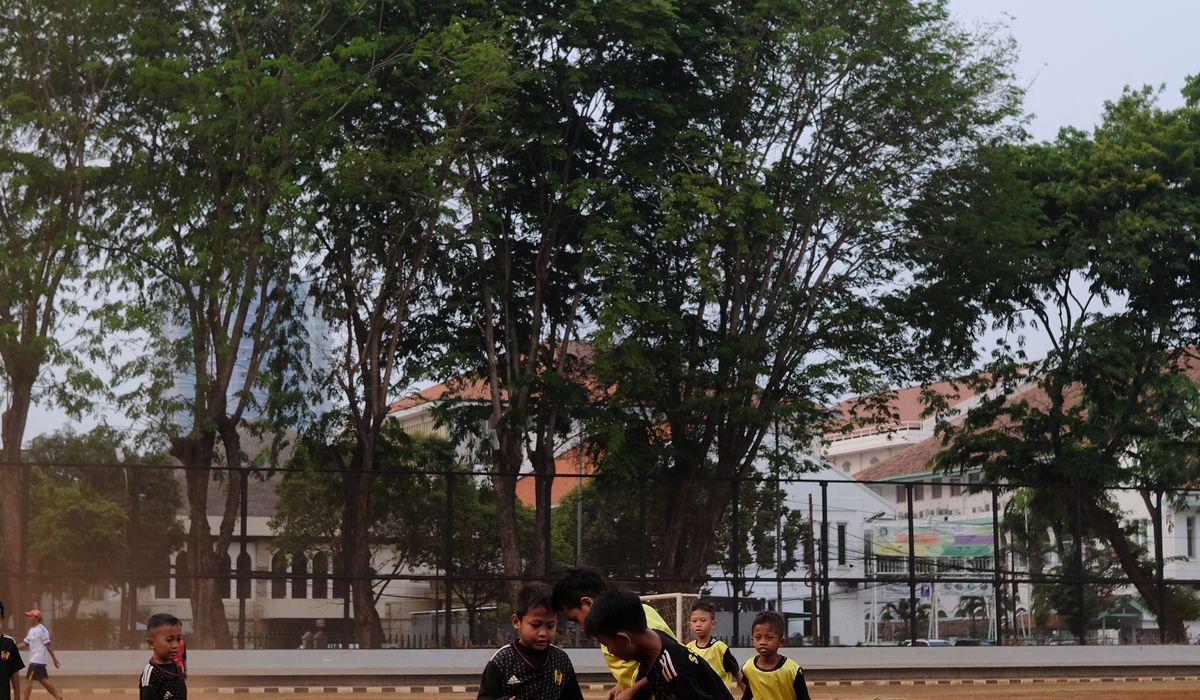
Why teamwork beats individual brilliance at grassroots level
Most children arrive at their first training session dreaming of scoring the winner. That is natural, and no coach should dampen it. But the real magic of grassroots football is what happens when a group of eight-year-olds realises they can achieve something together that none of them could manage alone. Teamwork is not an add-on to technical development; it is the soil in which everything else grows. A child who learns to communicate, trust a teammate, and work towards a shared goal will carry those skills far beyond the pitch. The good news is that you do not need elaborate equipment. You need drills that are deliberately cooperative and games that make talking unavoidable.
Begin with cooperative warm-ups
Warm-ups set the tone for the whole session. If they are solo stretches and laps, children start the evening thinking about themselves. Swap them for activities that require a partner or a small group from the very first whistle.
- Partner passing with a call: players stand five yards apart. Before every pass, they must call their partner's name. The receiving player shouts "yes" and takes a touch. Simple, but it builds the habit of looking up and speaking.
- Circle keep-ball: six players form a circle with two defenders in the middle. The ball cannot stop moving, and no one may pass back to the person who passed to them. Heads up, quick decisions, constant chatter.
- Number call-outs: give each child a number in a group of five. Call two or three numbers at random. Those players must combine to move the ball from one end of the grid to the other while the rest defend. Chaotic, funny, and brilliant for building awareness of others.
Small-sided games that make communication essential
Nothing teaches teamwork faster than a game where selfish play simply does not work. Three-a-side and four-a-side give every child more touches, more decisions, and more chances to speak. Add conditions to nudge them towards cooperation.
- Everyone touches: a goal only counts if every player on the team has touched the ball in the build-up. You will hear the shouting from the next pitch.
- Silent half, talking half: play two minutes in silence, then two minutes where every player must speak at least once before receiving. Ask which half felt easier. The answer is always the talking one.
- Captain for two minutes: rotate the captaincy so quieter children get a turn at organising. Give the captain one simple job, such as deciding who takes the kick-in.
- Direction change: place two goals at each end and call out which one to attack. Teams must reorganise together, which is where communication really shows.
Drills that build trust and shared responsibility
Trust does not appear by accident. It grows when children depend on one another in low-risk, structured situations. These work well with ages seven to twelve.
- Guided runner: in pairs, one player closes their eyes while the partner guides them around cones using only their voice. Swap after thirty seconds. It teaches clear instructions and careful listening.
- Shadow defending: defenders work in pairs against one attacker. One presses, the other covers. They must agree out loud who does which job, then rotate roles every minute.
- Relay to a shared target: in teams of four, each player dribbles a section of the course, but the team only scores if all four finish without the ball leaving the grid.
- Two-touch finishing: in a four-player move towards goal, no one may take more than two touches. Players quickly learn that holding on to the ball costs the team a chance.
Set shared goals before every session
Teamwork is easier when everyone knows what they are working towards. Spend two minutes at the start of training agreeing a team goal for the evening. Keep it simple and behavioural rather than results-based.
- "Tonight we will speak to each other before every pass."
- "Tonight we will encourage a teammate after every mistake."
- "Tonight we will try to complete ten passes in a row as a team."
Say the goal aloud in the huddle or write it on a whiteboard. At the end, ask the children whether they met it and what helped. Letting players set the goal themselves, even occasionally, gives them ownership and makes the commitment far more genuine.
Turning training habits into match-day instincts
Teamwork learned in drills will not appear on Saturday morning unless you deliberately praise it. When a child passes instead of shooting, name it. When a defender covers for a teammate, celebrate it as loudly as a goal. Rotate the captaincy each week, and ask players to nominate someone who helped them during the game. Afterwards, review with questions rather than lectures: "What worked well when you talked to each other?" and "What could we try next week?" Keep the tone warm, keep the sessions playful, and be patient. Some groups gel in a fortnight; others take a season. Either way, the lessons of communication, trust, and shared goals will outlast any scoreline, and that is the real victory of grassroots football.





John Doe
14 January, 2022Having no content in post should have adverse..
Chauffina Carr
10 April, 2022We use these tests all time! Killer stuff!
Jim Séchen
16 July, 2022Thanks for all the comments, everyone!