

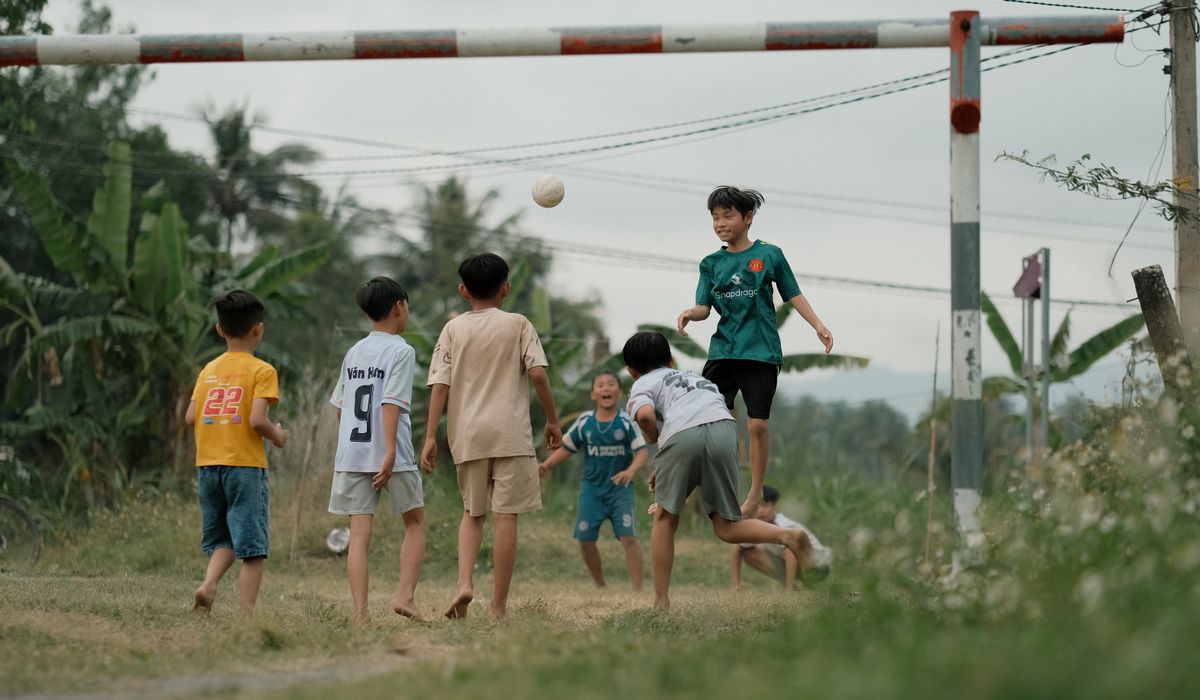
Why the first session matters more than you think
Ask any woman who played football as a girl what she remembers most, and it is rarely the scoreline. It is whether she felt wanted. Whether the coach learned her name. Whether anyone passed to her. For a girl walking into a grassroots club for the first time, those small details decide whether she comes back next week — and whether she is still playing at fifteen.
Girls' and women's football is growing quickly across the UK, but plenty of clubs still see girls drift away between the ages of nine and fourteen. The reasons are rarely about ability. They are about belonging. If we want more girls enjoying the game, we have to build environments where they feel genuinely welcome, tackle the tired assumptions that still surround girls' football, and make sure they can see women who look like them thriving in the sport.
Build a welcome that is obvious from the car park
Inclusion should be visible before a girl even kicks a ball. Parents and players notice signage, kit, language and who is standing on the touchline. Small, deliberate choices send a clear message.
- Advertise for girls specifically. "New players welcome" is vague. "Girls' under-11s training, Saturdays 10am, all abilities" tells a family exactly where they fit.
- Have a named contact. A friendly first point of contact who answers emails within a day removes a huge barrier for nervous newcomers.
- Offer a taster session. Two or three free sessions with no commitment lets a girl try the sport without pressure — and gives parents a chance to see the culture for themselves.
- Get the kit right. Have smaller sizes available, and let girls wear what they are comfortable in while you sort it out. Nothing says "this isn't for you" like a shirt that swamps you.
- Sort the facilities. Access to clean, private changing areas and toilets is not a luxury. It is often the difference between a girl staying and a girl quitting.
Challenge the stereotypes, gently and often
The idea that football is "for boys" is fading, but it has not gone. It shows up in throwaway comments from relatives, in playground teasing, and occasionally in the attitudes of coaches who should know better. Grassroots clubs are perfectly placed to push back.
Start with the language you use. Avoid offhand lines like "she's good for a girl" — praise the pass, the tackle, the work rate, exactly as you would for a boy. Praise effort and decisions rather than appearance or natural talent. If a parent jokes that their daughter will "grow out of it", a warm reply about how many women now play into their forties and fifties can shift the conversation.
Mixed football has its place, and many girls thrive in it at younger ages. But from around eleven, most girls benefit from a dedicated pathway where they are not the only one, where they get equal pitch time, and where they are not constantly playing second fiddle to the boys' teams. Where mixed football continues, make sure girls are not rotated out first or stuck in defence while the boys chase goals.
Include the girls in everything else too — socials, awards, kit launches, end-of-season presentations. If the girls' section always feels like an afterthought, players will treat it that way themselves.
Put female role models in front of them
You do not need a household name to inspire a nine-year-old. You need women who are visible, approachable and clearly love the game.
- Recruit female coaches, even if part-time. A teenage volunteer from the local college or a parent who played at university can transform how girls see their own future.
- Invite older girls' teams to train alongside the younger age groups. Seeing a fifteen-year-old in club colours doing keepy-uppies is powerful, relatable proof of what comes next.
- Watch the women's game together. Organise a club trip or a screening. Talk about the players' journeys, not just the results.
- Celebrate your own. Give girls captaincy, coaching badges, refereeing courses and committee roles as they get older. Leadership keeps teenagers involved when playing time gets competitive.
Practical touches that keep girls coming back
Retention is won in the ordinary details. Ask the girls what they want from the session and act on it — some love small-sided games, others want skills practice, and many want a laugh with friends. Keep sessions high-energy with plenty of ball touches and minimal queuing. Rotate positions so nobody is pigeonholed as "the defender".
Communicate with parents clearly, especially about cost, kit and travel, since these are real barriers. If your club can offer subsidised places, funded boots or a lift-share rota, say so quietly and without fuss.
Finally, listen. If a girl says she is not enjoying it, believe her and ask why. Sometimes the fix is a different position or a kinder teammate; sometimes it is a word with a coach. Either way, acting on feedback shows her that her place in the team is genuinely valued — and that is what keeps girls in grassroots football for years to come.






John Doe
14 January, 2022Having no content in post should have adverse..
Chauffina Carr
10 April, 2022We use these tests all time! Killer stuff!
Jim Séchen
16 July, 2022Thanks for all the comments, everyone!