

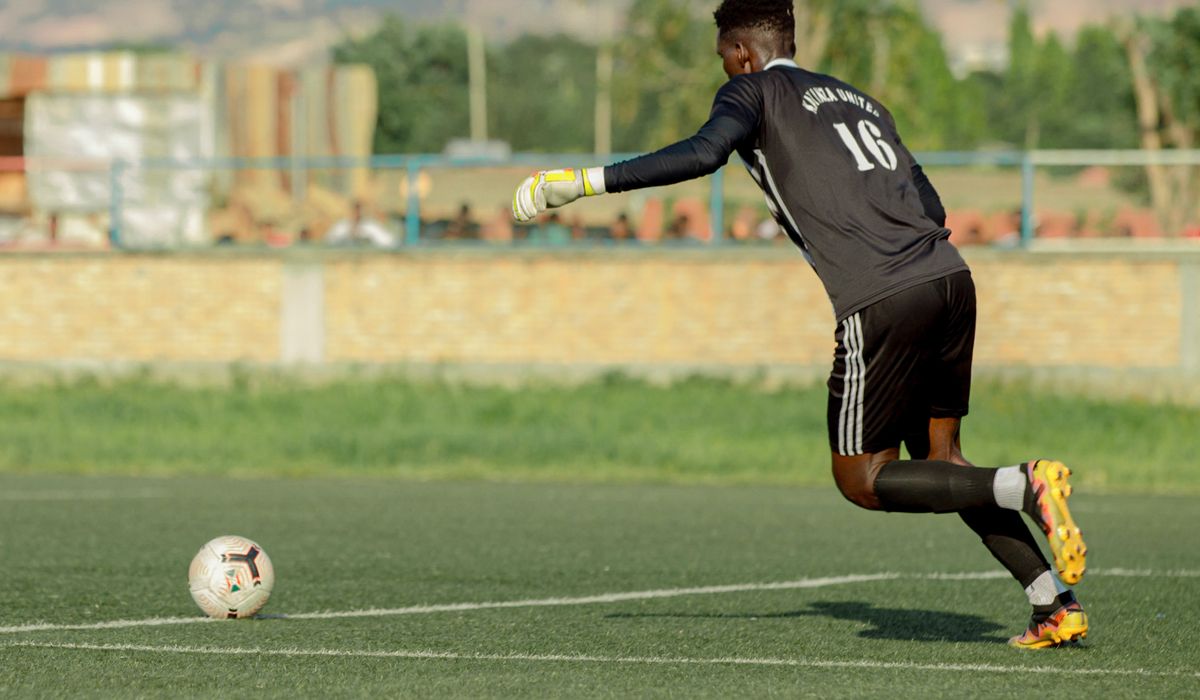
Why passing deserves more of your session time
Ask any coach working with Under-8s to Under-13s what their team needs most, and "better passing" is usually near the top of the list. It is tempting to fix that with long, static lines and shouted instructions. In reality, young players learn to pass the way they learn everything else: through lots of touches, in small spaces, with a reason to make the next pass. If a session gives every player forty or fifty passes on the ball and a decision to make before each one, improvement comes quickly. Your job is to design practices that make good passing obvious and careless passing costly — even for a group of eight-year-olds who just want to score goals.
The good news is that this does not require expensive kit or a full-size pitch. A dozen markers, a handful of bibs and a bag of balls will do.
Begin with simple rondos
A rondo is simply a possession game in a small area, and it remains the most efficient way to build passing habits. Keep the numbers small and the space tight enough that players must think their way out rather than knock it long and safe.
Start with 4v1 in an eight-yard square for your youngest group, moving to 5v2 in a twelve-yard square once they can cope with two defenders. A few ground rules keep it sharp:
- Score a point for every four or five consecutive passes — then restart with a new defender.
- Limit players to two touches so the ball does not stick. Allow one touch only when they are ready for it.
- Change the defender every sixty to ninety seconds, and keep a spare ball at the side so the game restarts instantly.
- Insist the defender counts out loud at first; it teaches both groups to track the ball.
Watch for players standing still in a neat circle. Nudge them to move after every pass, even just two or three yards. A rondo where nobody moves teaches passing to a stationary target, which is not the game you are preparing them for.
Target games build accuracy and weight
Young players usually understand where to pass long before they understand how hard. Target games fix that, because a pass that is too firm or too soft simply fails.
Set up pairs ten to fifteen yards apart with a gate of two markers between them. The players pass through the gate and receive on the other side. Progress by adding a condition: three passes through the gate earns a point, or the receiving player must control the ball with the far foot before returning it. Mix up distances within the same practice — short, sharp passes followed by one longer one — so players learn to adjust their weight instinctively.
You can also use a "three-goal" format: place three small goals on a line and let pairs score by passing through any of them. It sounds simple, and it is, but it produces hundreds of deliberate passes in ten minutes with almost no queuing.
Make it directional so decisions matter
Possession for its own sake is a means to an end. As soon as you can, add a direction: play into an end zone, through a gate, or towards a goal with a goalkeeper. This is where passing stops being an exercise and becomes football.
A reliable progression is 4v4 plus two neutral players in a 30x20 yard area, with the team in possession scoring by passing into a marked end zone. The neutral players give the team on the ball an easy option and keep the game flowing. If your group finds that too easy, remove a neutral player or shrink the area by five yards.
Encourage players to look before they receive. A simple prompt works well: "Check your shoulder, then check the ball." Once they start scanning, you will see far fewer passes played straight into trouble.
Coach the timing, not just the technique
Technique without timing produces players who pass well in drills and badly on Saturdays. Two small habits close that gap:
- Pass to the back foot. Ask players to aim for the foot furthest from the nearest defender, so the receiver can play forward on their first touch.
- Move after you pass. A pass is not the end of the action. Support the receiver at an angle, never directly behind them.
Keep your voice to one or two words per moment — "scan", "weight", "move" — and let the practice do the teaching. Children remember far more from a game that punished a slow pass than from a five-minute lecture on technique.
Fitting it into a weekly session
You do not need to rebuild your whole session plan. A simple shape works for most age groups:
- Warm-up (10 minutes): pairs passing through gates, then a quick 4v1 rondo.
- Main practice (20 minutes): 5v2 rondo progressing into a directional possession game.
- Game-related (20 minutes): small-sided match with a condition — for example, every goal must come from a pass played into the end zone first.
Finish with a free game and no conditions at all. Let them play, watch what carries over, and jot down one thing to revisit next week. Progress in passing is rarely dramatic; it arrives quietly, week by week, in a hundred small passes.





John Doe
14 January, 2022Having no content in post should have adverse..
Chauffina Carr
10 April, 2022We use these tests all time! Killer stuff!
Jim Séchen
16 July, 2022Thanks for all the comments, everyone!